Prompt Flow
A storefront for role-based AI prompt packs, curated for the real work a profession does rather than one-size-fits-all prompts.
Designed and built end to end with an AI-native workflow, no Figma and no engineering team. Two designers took it from a cafe idea to a live storefront that runs itself.

- 01 Roles
- Brand, Build, Content Strategy, Design Direction, Product Design, Prompt Design
- 02 Collaborator
Co-Founder Alex Shlafer
- 03 Approach
- AI-native workflow, designed and built directly in code
- 04 Website
- getpromptflow.dev
Why it exists
The value isn't the prompt; it's the work before it
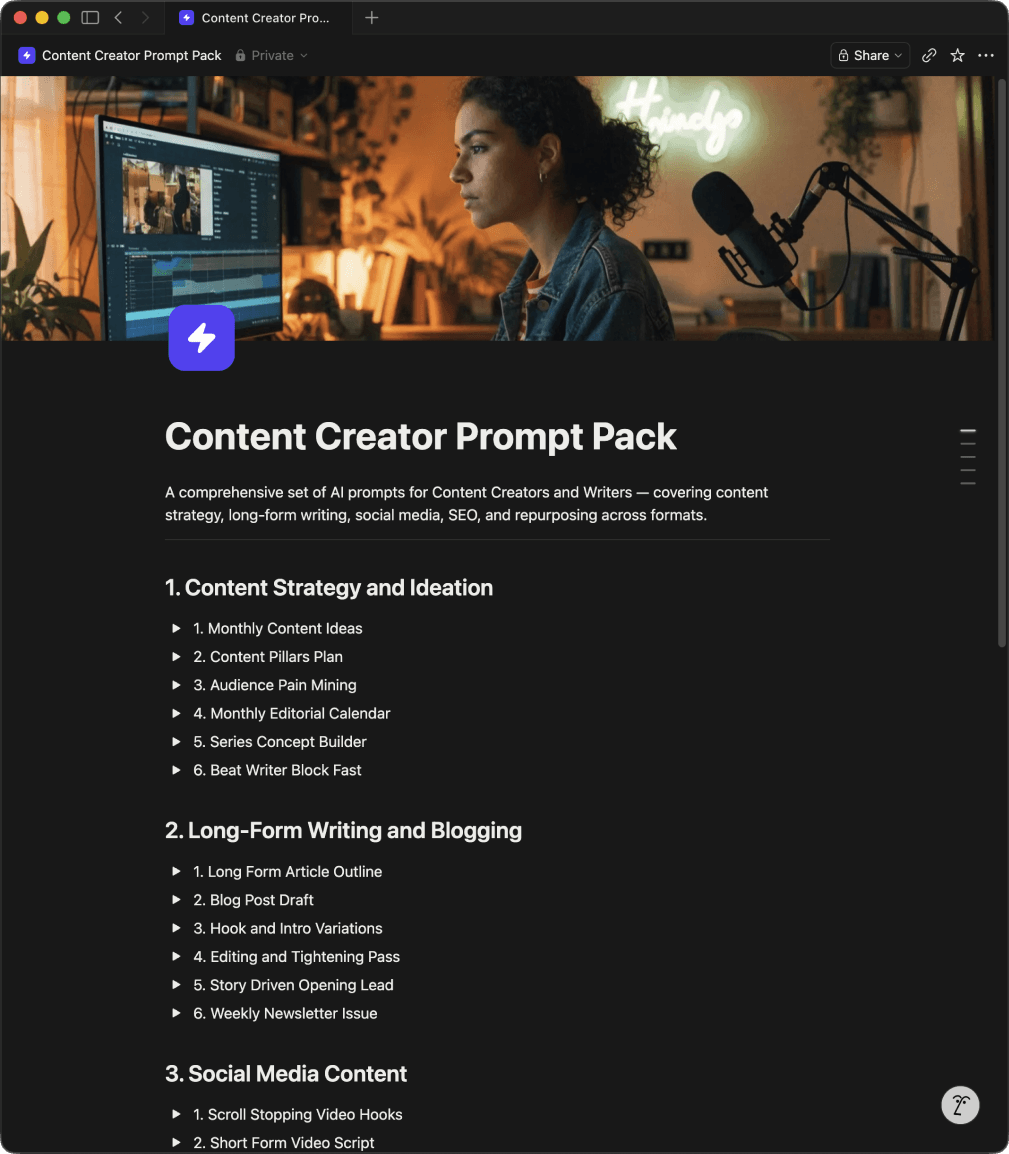
AI is everywhere at work, but for most people it still underdelivers: a blank box, a vague prompt, and several rounds of editing that rarely get to great. The skill that closes that gap, prompt craft, is real but invisible, and it isn't most people's job to learn it. Prompt Flow's bet is to sell that invisible craft directly, packaged by role and delivered with as little friction as possible.
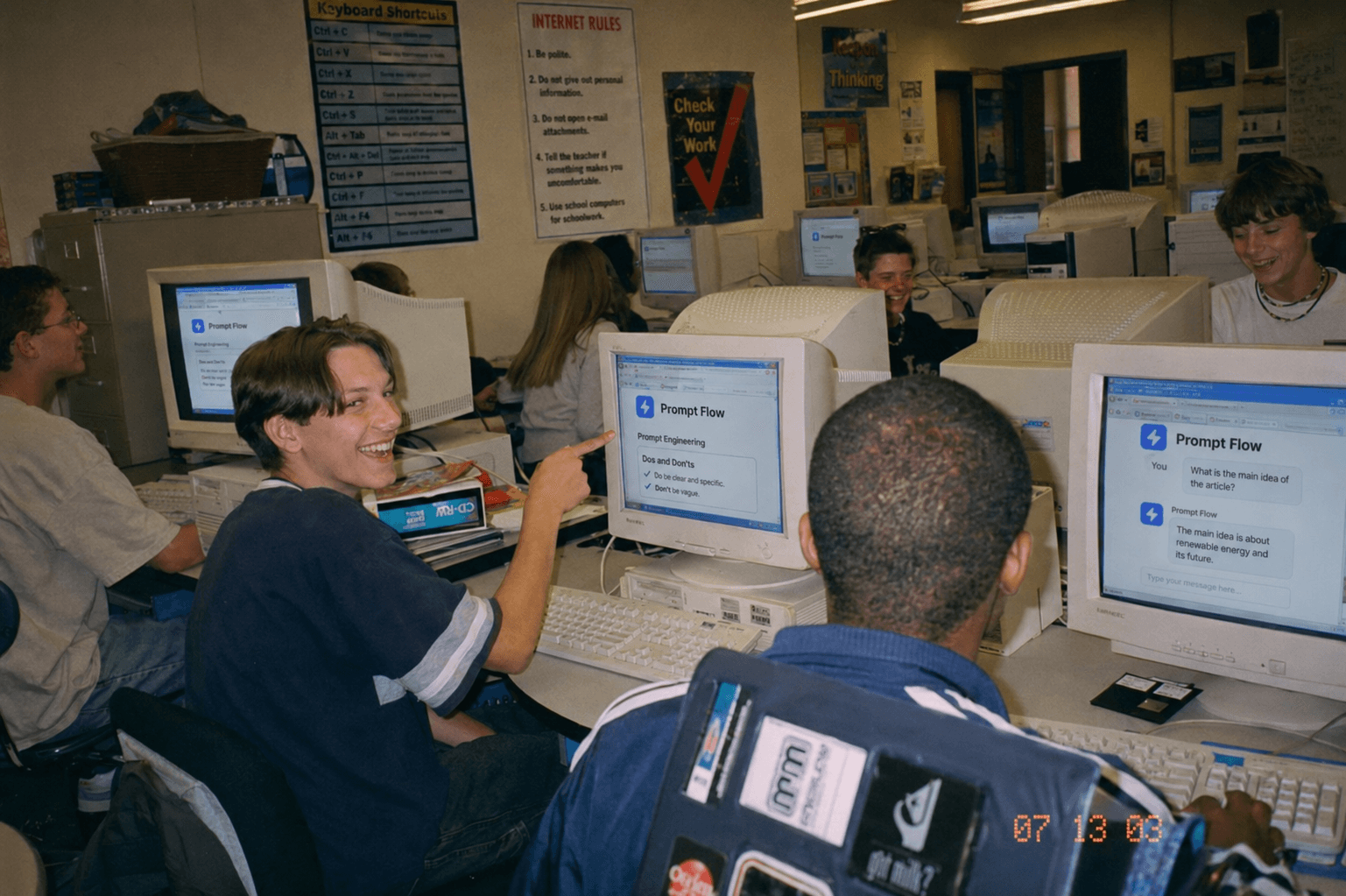
Note: Image generated with AI.
Prompt: Create one photorealistic candid disposable-camera snapshot set in a fictional early-2000s American high school computer lab. Alternate-history, anachronistic premise: every student is using Prompt Flow (logo attached) on old beige CRT monitors and bulky desktop towers. The scene feels like 2002 to 2004: rows of tan computers, rolling chairs, Windows XP-era browser windows, ball mice, tangled cables, binder stickers, floppy disks, CD-ROM binders, overhead fluorescent lights, laminated keyboard-shortcut posters, backpacks under desks. A diverse group of high school students in casual period-appropriate clothing (graphic tees, cargo pants, sneakers) lean toward their screens, laughing. One points at the Prompt Flow logo, another is typing. Several monitors show simple, readable on-screen text: "Prompt Engineering," "Dos and Don'ts," and short chat bubbles. Keep the interface plain and dated. Do not imitate a modern polished app UI. Style: candid and nostalgic, imperfect flash photo, mild motion blur, film grain, slightly off-center composition, orange date stamp in the corner reading 07 13 03.
The storefront
Designed to earn trust at first glance
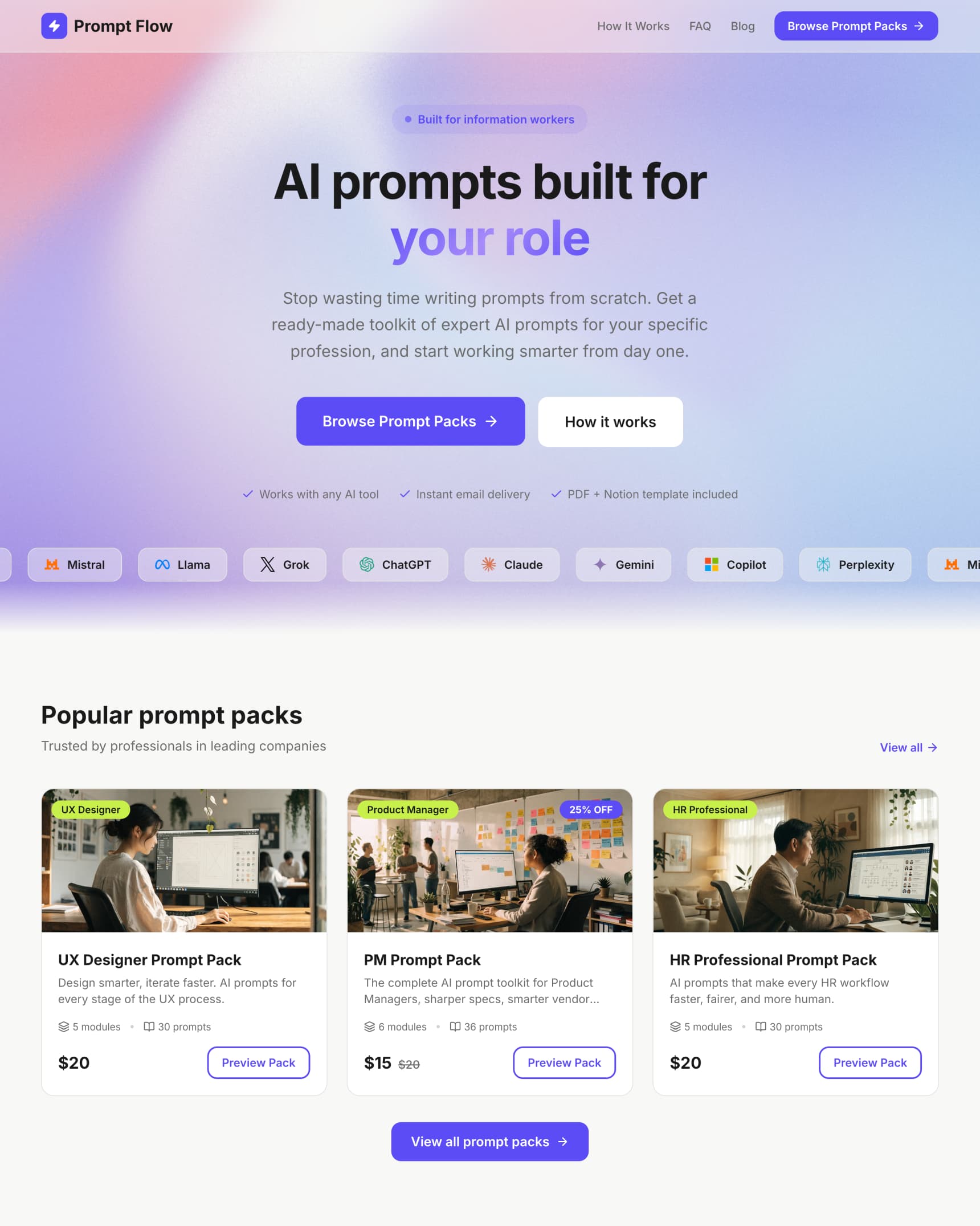
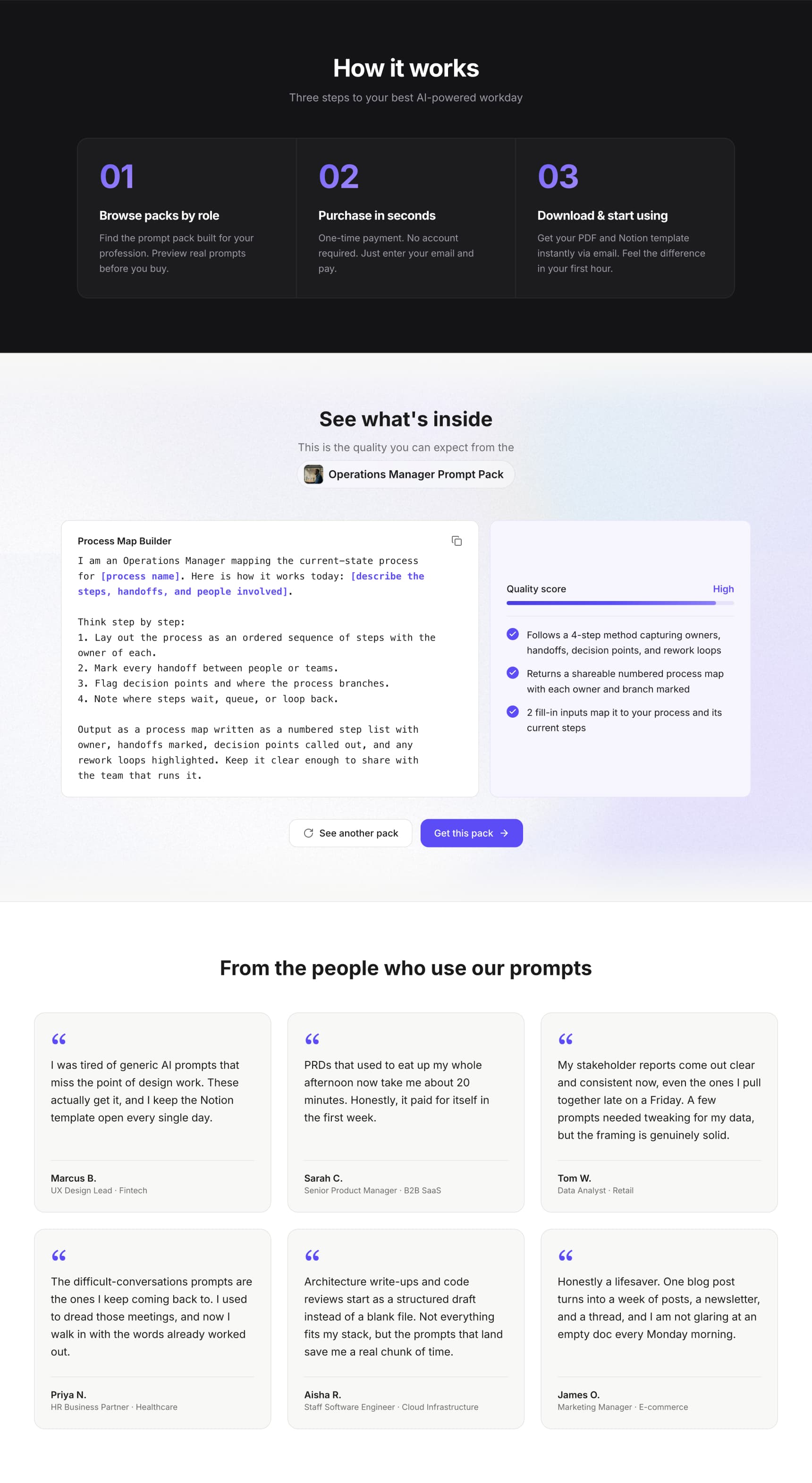
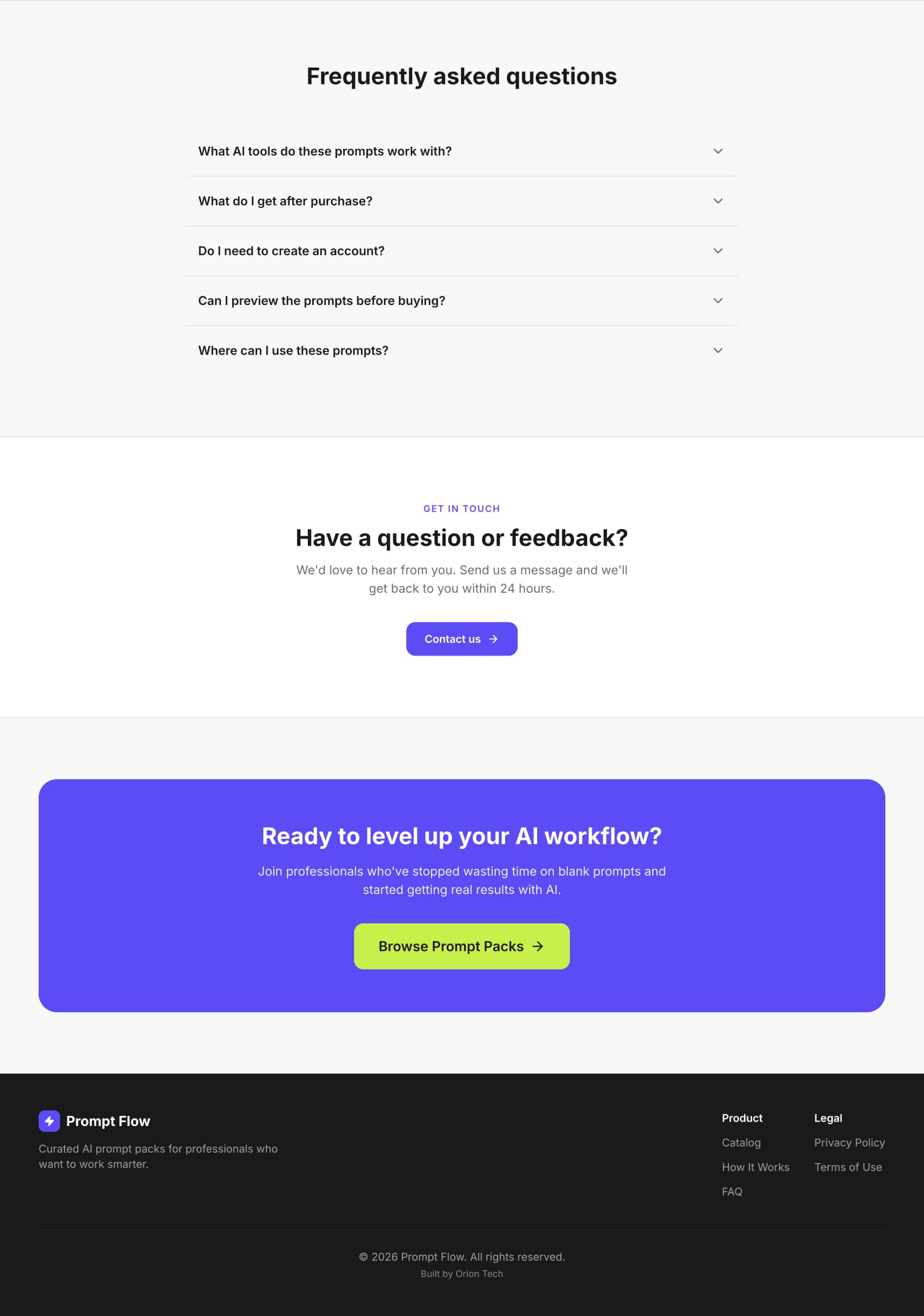
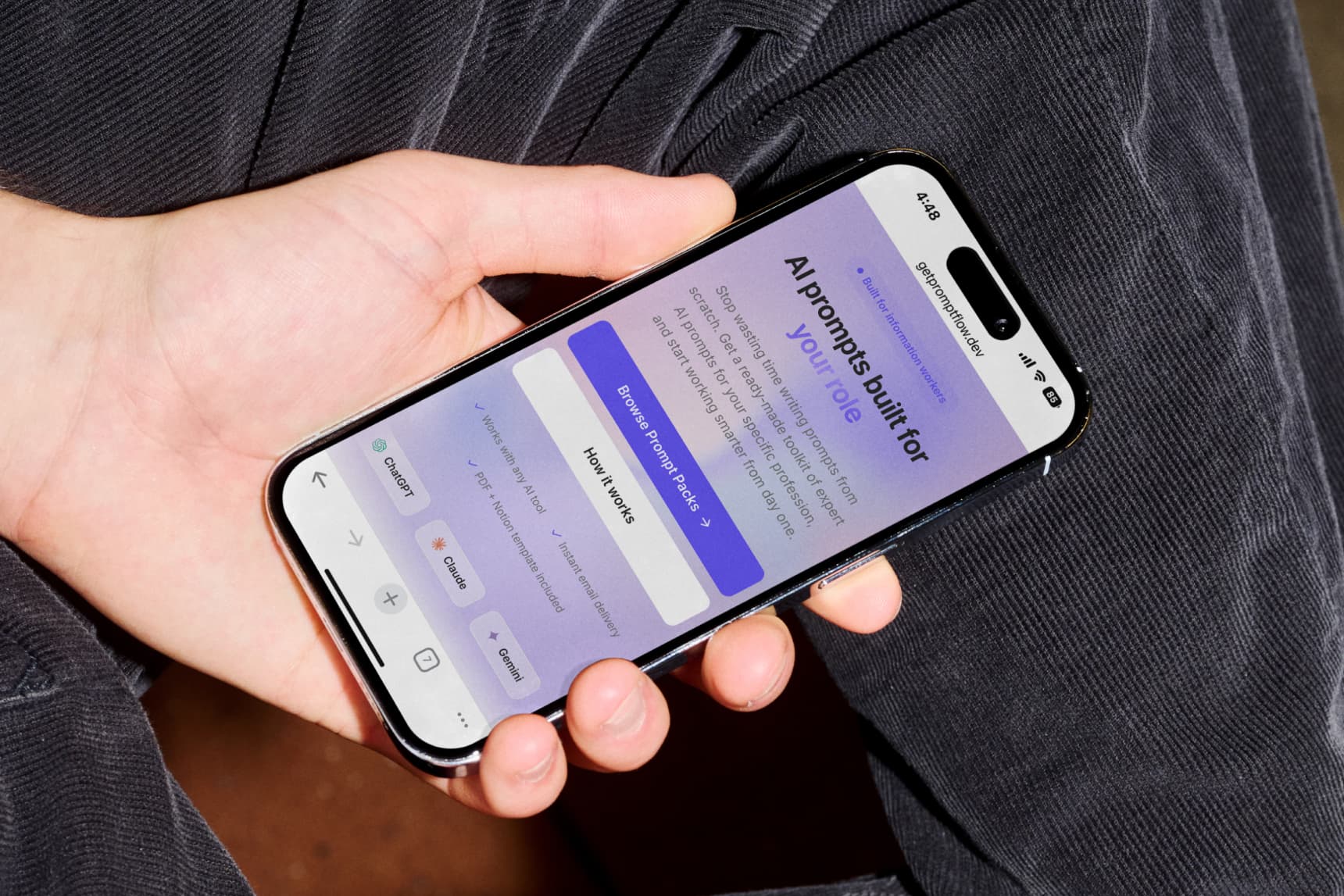
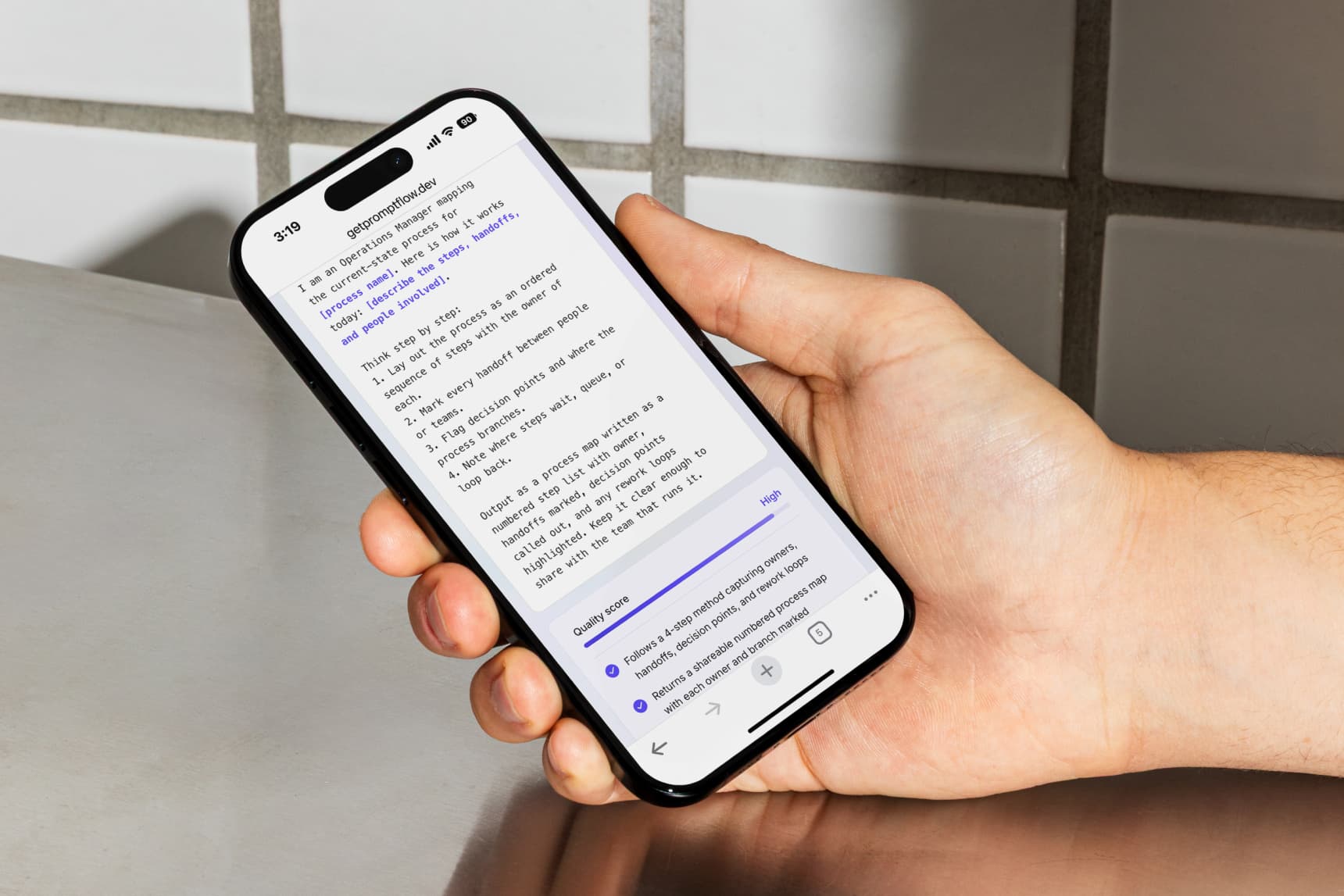
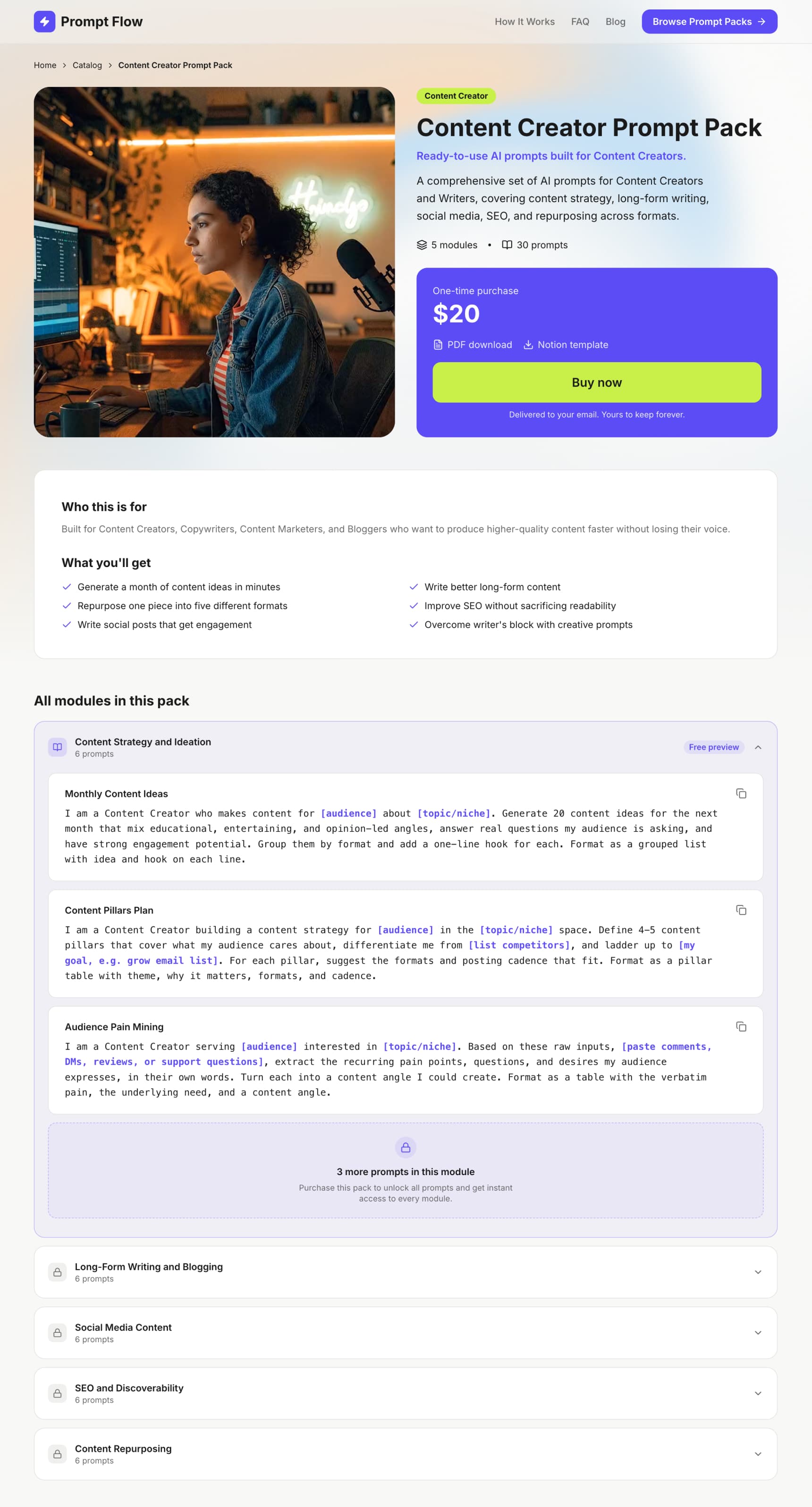
The homepage has one job: make the first read count. It states the promise in a single line, shows the AI tools every pack already works with, and leads with real packs that are upfront about what is inside and what they cost. A sample prompt sits right there so a visitor can judge the quality themselves, instead of taking our word for it.

Catalog
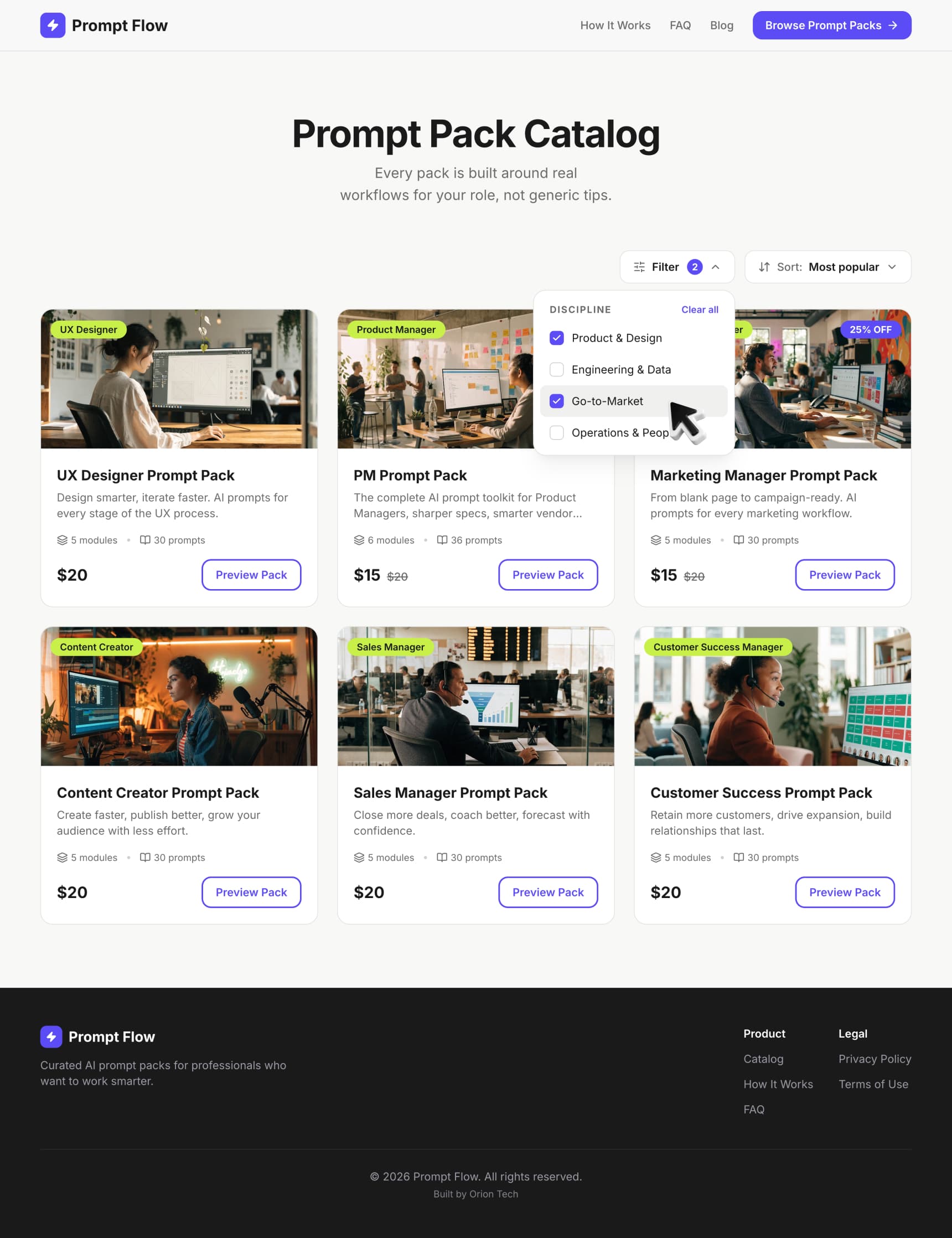
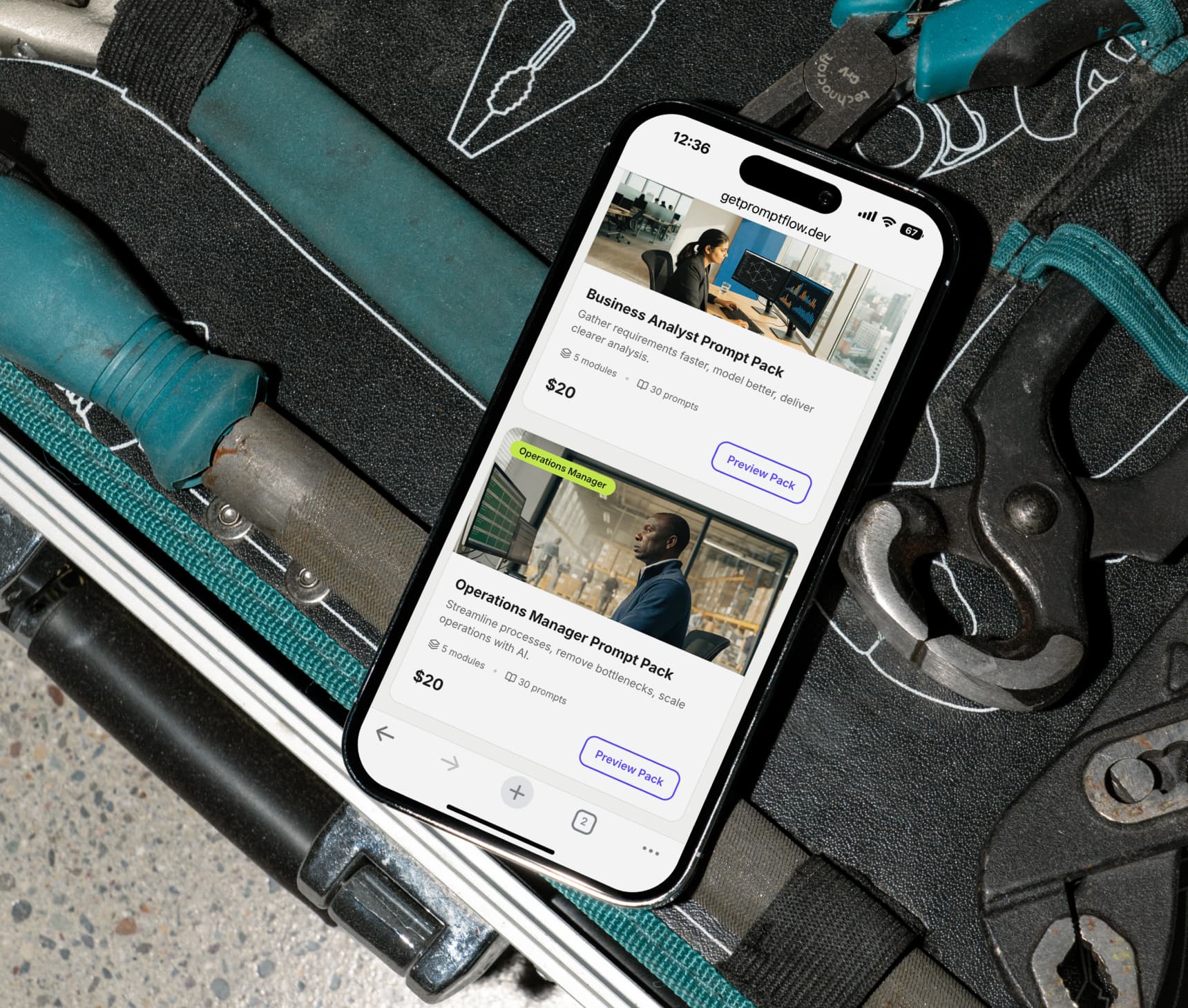
Every pack maps to a role, so you find yours by recognizing your own job, and a discipline filter narrows a growing library fast. Each card plays a short clip on hover, so browsing stays alive instead of reading like a bulk template dump.

Pack page
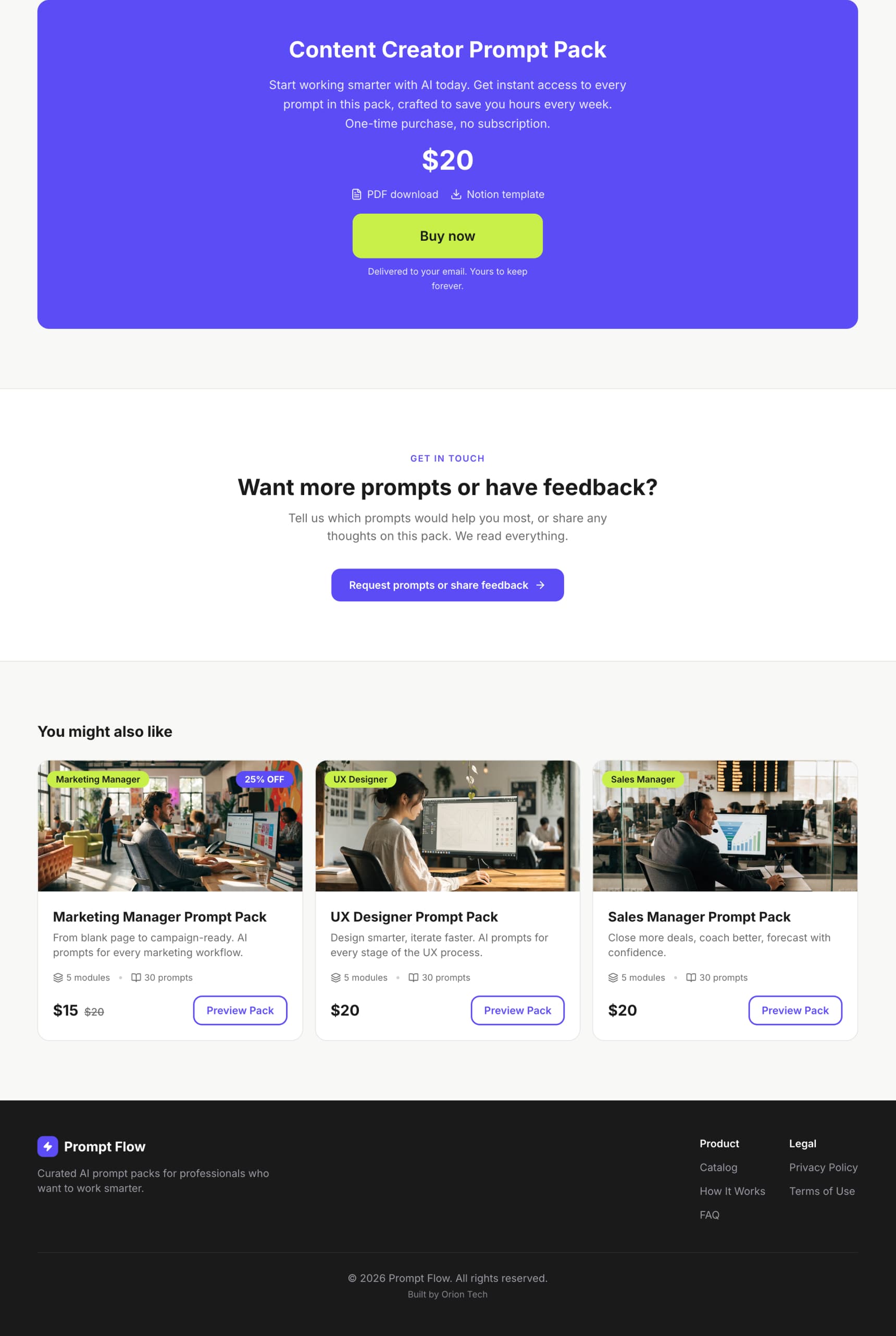
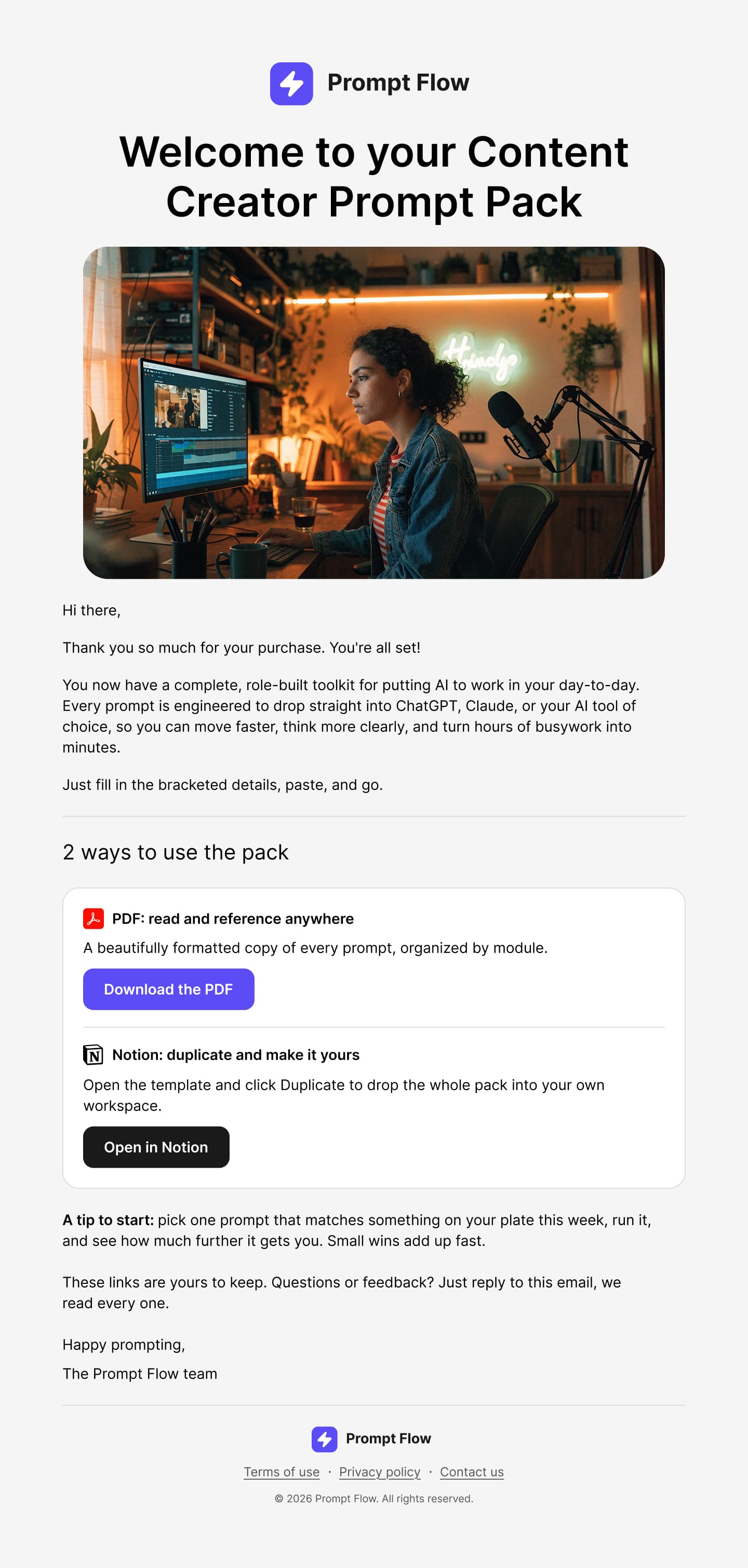
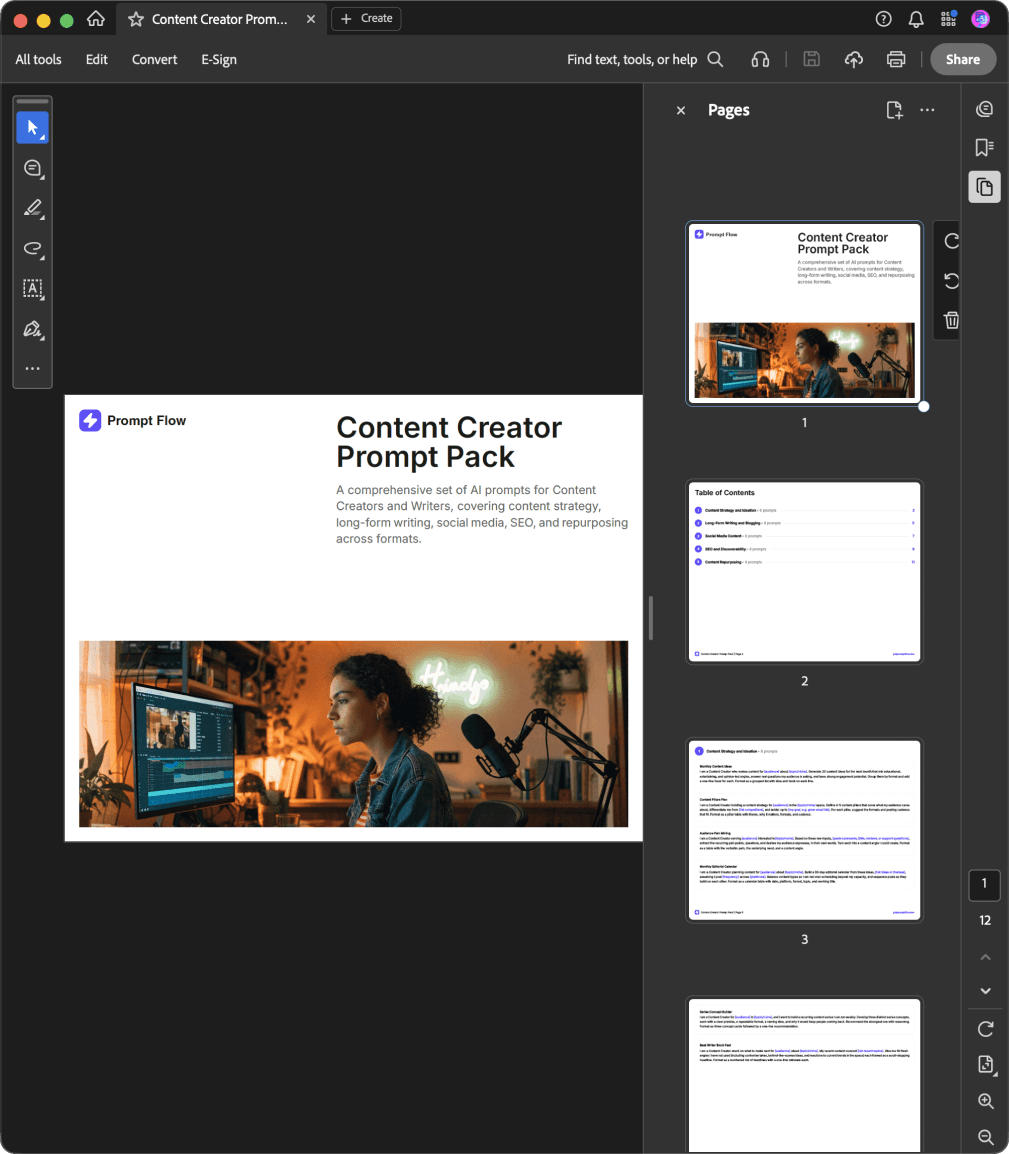
With thirty-plus prompts a buyer cannot fully see yet, the pack page has to earn trust before payment. A free module proves the quality; the description stays plain and specific; and checkout is a single step that delivers the pack instantly as a PDF and a Notion template, no account required.

A coherent system
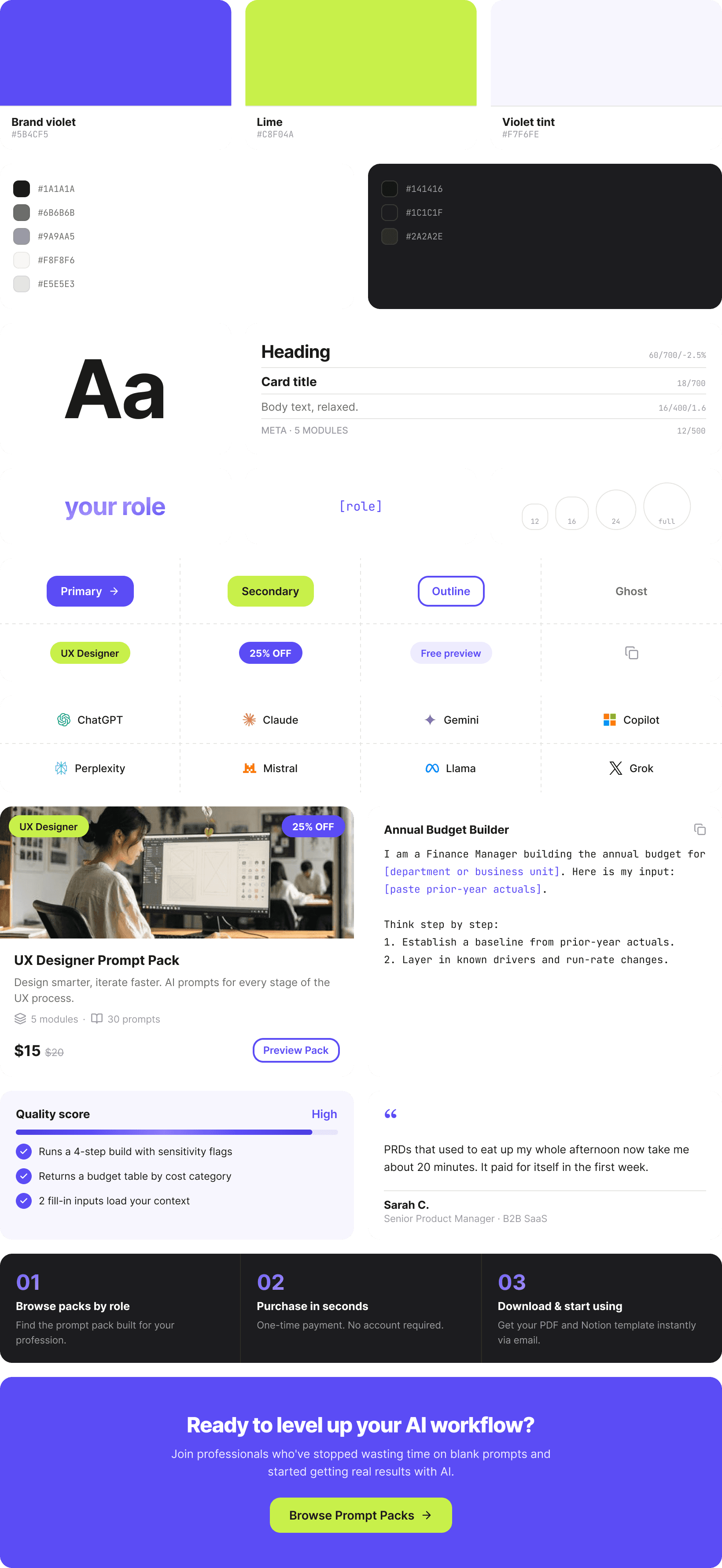
Underneath the range sits one system. A single brand purple on warm off-white, open whitespace, and a steady vertical rhythm keep every pack feeling like part of the same store. Each pack page then paints its own gradient, sampled from the pack artwork by a small palette script and softened into brand pastels, so it feels tailored to its pack without anyone hand-picking colors. Even the copy is treated as a design material: plain and specific.
Built with AI
Owning the code changed what we could design
We didn't design screens in a canvas tool and hand them off. We designed in the medium, directly in code, iterating in the browser at real breakpoints with live content. Agentic coding was our primary design surface, where making was the thinking.
- Vibe-coded quick prototypes to validate ideas, a far faster loop than mockup and handoff.
- Refined the live product at every scale, from IA down to the spacing rhythm and a hand-tuned gradient.
- Fixed visual bugs in the browser on the spot.
- Owned the front end and back end directly, so design decisions reached the live product without a handoff to lose them.
- Generated the imagery and video with creative AI tools, art-directed to one consistent style.
These are the tools we built it with:









The store runs itself
Sending an order automatically isn't unusual anymore. What's different here is what happens after we write each pack:
- Hold every prompt to the same structure and quality bar.
- Catch the small mistakes and off-key wording that slip in by hand.
- Keep every format a customer receives in sync as the library grows.
The same agentic workflow that built the store now runs it, so growth never waits on hiring.